Projects
CourseConnectIn progress · stable buildAug 2025 – Present
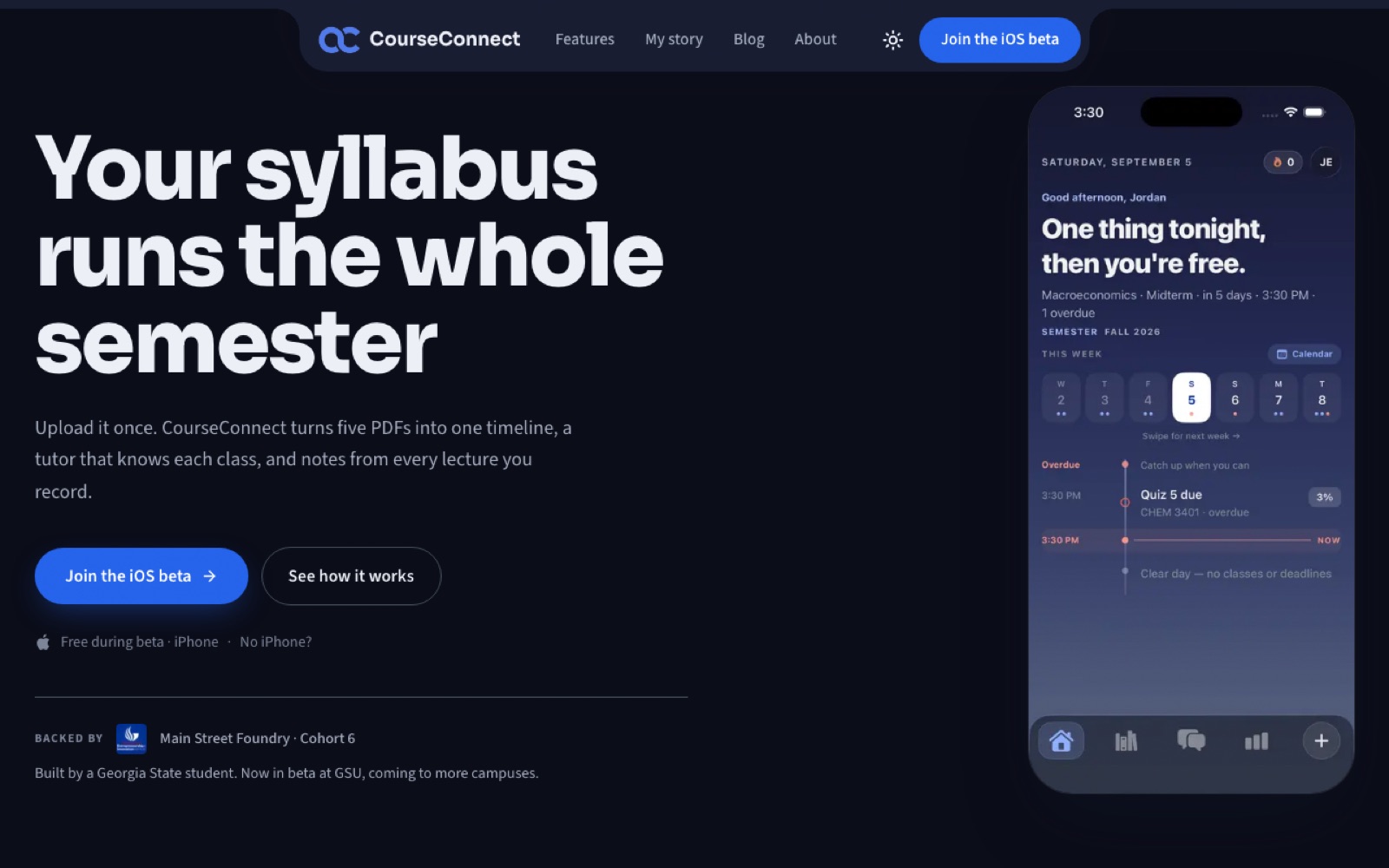
The study app built around the classes you’re actually taking
Problem
College work isn’t hard because the material is hard — it’s hard because it’s scattered. Deadlines live in PDFs, half of what matters is only said out loud in lecture, and a general chatbot has never seen your syllabus. After one messy semester at GSU, I wanted something that kept me connected to the course itself, not another tab of notes.
What I built
An iPhone app (plus web and Chrome sync) where you upload each syllabus once. Built as founder at CourseConnect AI LLC; in beta with Main Street Foundry, free on TestFlight.
- one timeline of classes and deadlines
- lecture recording that becomes notes and catches spoken due dates
- a tutor per class that knows your syllabus
- grades imported from Safari (D2L/Canvas) without your school password
- lock-screen widgets and calendar sync
What I learned
The “connect classmates” chat idea was the wrong half of the name — hard to get right, and not what people needed first. The syllabus-on-your-phone pivot was. Also: if a professor only says a deadline out loud, recording isn’t a nice-to-have — it’s the product. I still use it every day; most of what’s in the app came from living in it, not from a roadmap.
GaitGuardIn progressOpen sourceJan 2026 – Present
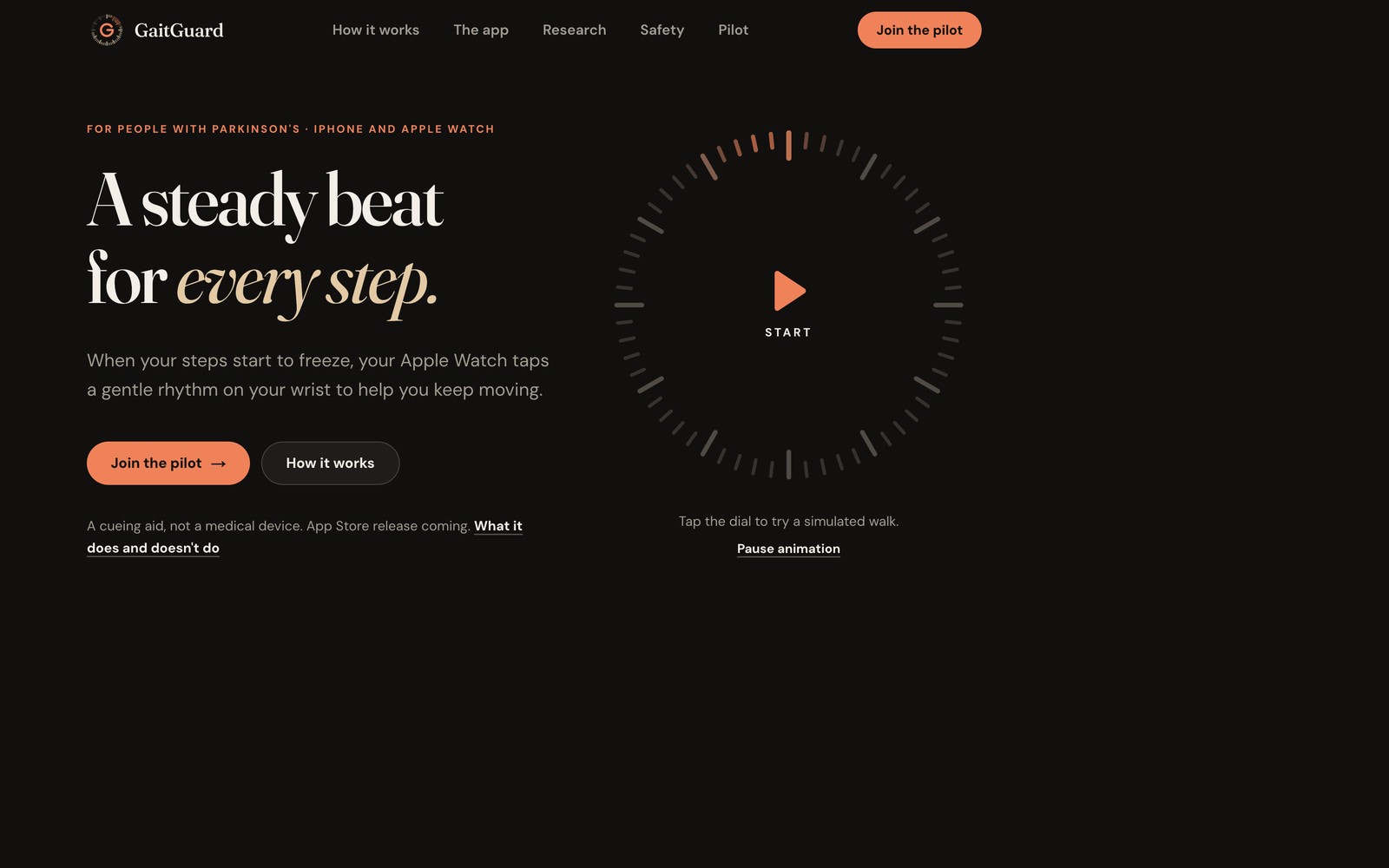
A steady beat for every step
Problem
My mom was diagnosed with Parkinson’s, and freezing of gait can stop someone mid-step with little warning. Clinic care doesn’t cover the hallway at home — I wanted something on her wrist that could notice a freeze and help the next step come.
What I built
An iPhone + Apple Watch cueing aid (not a medical device) that learns your walk, runs on the Watch without the phone nearby, and taps a gentle rhythm when steps stall. Built for my mom, and for anyone else who deals with this. Pilot open at gaitguard-app.vercel.app.
- 30-second calibration that sets personal freeze thresholds and cue tempo
- Watch-first rhythmic haptics (60–130 BPM) when a freeze hits
- thumbs up/down after each cue so sensitivity adapts to you
- optional beat-while-walking metronome, steadiness score, history/trends + CSV export
- private by default — data stays on device, no account
What I learned
HealthKit + WatchConnectivity force you to design for the wrist first. False positives hurt trust faster than a missed cue — and building for someone you love makes the honesty bar higher: say what it is, what it isn’t, and invite real feedback early.
PlanDropLiveOpen sourceMar 28, 2026 · Hacklanta

Stop debating. Claim a plan.
Problem
Group chats die in “where should we go?” loops. By the time someone picks a place, the night’s gone. We wanted plans that feel scarce and real — venues you can actually walk into.
What I built
An open-source 12-hour Hacklanta build: AI proposes outings for your city with real Google Places data, then crews claim them over Supabase Realtime before someone else does.
- AI plan pool for your area
- live claim / release with scarcity
- real venues, photos, and maps
- shareable crew briefing page
What I learned
Scarcity makes people decide. Real Places data beats fake cards. Shipping in 12 hours means cutting every feature that isn’t the claim loop.
WayframeIn progressOct 2026 – Present
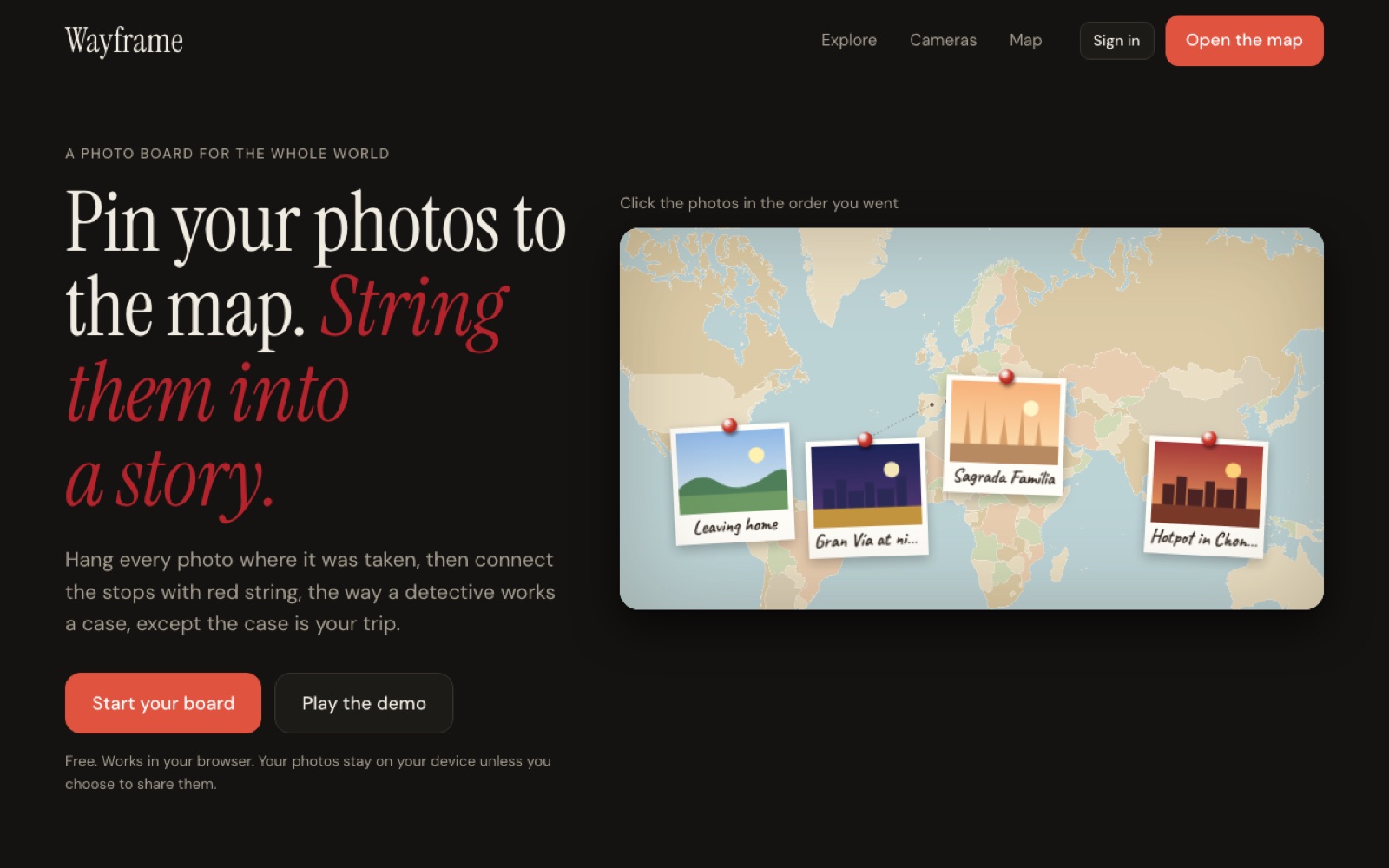
Pin every photo where it happened
Problem
Camera rolls bury the trip. I wanted a place that treats photos as a route — pins on a map, string between stops — not another infinite grid.
What I built
A photo board for the world: geotag shots, connect them with red string, and play the trip back. Built with help from my friend Steven after I got into photography.
- map pins from EXIF / place
- red string between stops
- play-the-route camera fly
- public profiles and stories
What I learned
The map is the product. Private-by-default matters. And once you can play a trip, a flat gallery feels dead — which is why this portfolio reuses the same idea.
Experience
Built an all-in-one iOS app and website for students: a timeline of classes and deadlines, an AI tutor per class, grade tracking, and lecture recordings that become organized notes.
Research with Dr. Armin Mikler, Chair of the Computer Science Department.
Photos@pogami on Wayframe ↗
Wayframe27 photos · 8 places
taking pictures of whatever i like follow me on instagram @overawakened and @pogami
Shot on SONY DSC-V1, Apple iPhone 16, Panasonic DMC-LX1, Apple iPhone 11
Writing
Listening